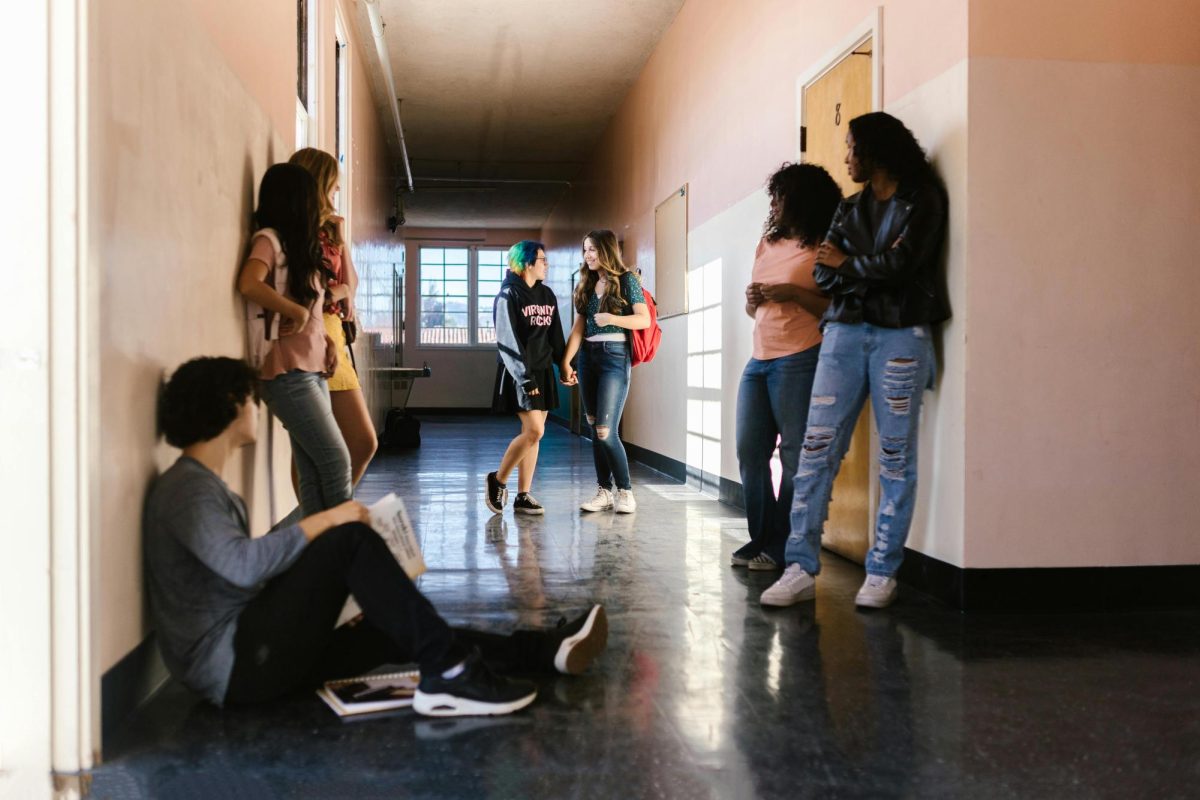
Austin High School is 36% Hispanic. Yet, since freshman year, almost all of my classes have had at most two Hispanic students, including myself. The only exception was a grade-level English class that I took freshman year, composed almost entirely of Hispanic students. I found that the rigor of the grade-level class was far less than that of any advanced class I had taken, which isn’t surprising in and of itself; however, I wondered why the class didn’t even attempt to challenge the students. By my junior year, I finally noticed the blatantly obvious pattern. My AP classes had little to no non-White students. Curious, I decided to research this disparity, and what I found was enraging. According to The Russell Sage Foundation, after the 1954 US Supreme Court decision, Brown v. Board of Education, public schools implemented an “advanced curriculum” system that promotes racial segregation. Now, some might view this as a bold statement, but it turns out this topic has been widely researched. How this within-school segregation works is by placing White students in advanced and AP classes, while placing non-White students in grade-level classes. This upset me, as I realized how this racial dynamic is still present even at our liberal-leaning high school. Around this time, I had begun giving advisory presentations through the National Honors Society to freshman and sophomore advisories. In several of the presentations, I was able to explain to underclassmen the benefits of taking advanced classes, how to enroll in them, and what to expect. After each presentation, I found myself speaking mainly with non-White students who were interested in taking advanced classes the following year. What they shared with me was that they had never been encouraged by their parents or teachers to challenge themselves academically. Since middle school, many of them had been discouraged from taking accelerated classes, which inevitably carried over to high school in the form of automatic placement in grade-level classes. Due to the lack of encouragement from these students’ environments, many of them believed they were incapable of succeeding in these more difficult classes. Of course, there are barriers apart from the advanced curriculum, such as language proficiency and economic status, that discourage participation in advanced classes. But I believe that if students were given the opportunity, encouragement, and most of all, the support to challenge themselves academically, there would be a major increase in non-White students in AP classes. I recognize that this issue has unfortunately become an intrinsic part of the public school system, making it extremely difficult to remedy. However, what we can all do is spread awareness about the disparities that still exist within our schools, as well as remind non-White students that they too have the capability to take these classes.
How AP Classes Perpetuate Racial Segregation
December 9, 2025

“There are barriers apart from the advanced curriculum, such as language proficiency”
Tags:
More to Discover